
Research
Photo Credits Jean Penninck
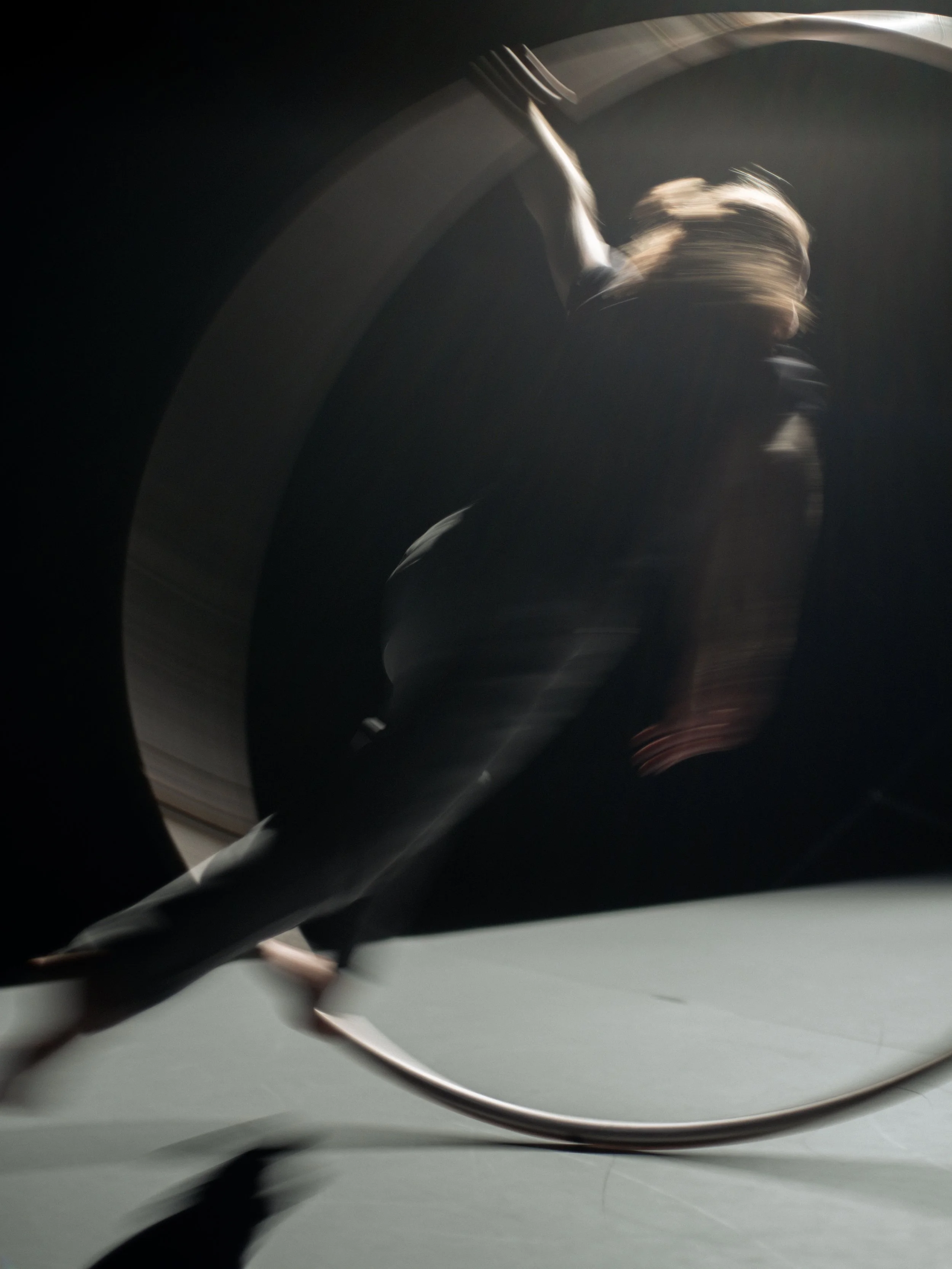
A Somatic Approach to the Wheel
The company upholds research as fundamental to a coherent artistic reflection within the contemporary world.
Stefan Kinsman was invited by the Théâtre de l’Avant-Scène in Cognac (France) to become an associate research artist for the 2022–2023 season. From this collaboration emerged a research project centered on the circus apparatus of the Wheel. During this process, Stefan was given one week of residency per month at various partner venues.
This research questions the very technique of the apparatus. Until now, the methods used to approach a circus apparatus have paid little attention to the internal sensations experienced by practitioners. The performers’ sensitivity to their own sensations, and their awareness of the space in which both body and apparatus exist, have remained merely influences or inspirations for some circus artists.
In dance, martial arts, and theatre, numerous methods have been developed that are grounded in internal sensation and the awareness of the body in space. These approaches are grouped under the term somatic practices. In circus, however, techniques that are truly based on sensation and attention—rather than simply influenced by them—are almost nonexistent.
A somatic practice brings together three fundamental principles: slowness of movement, the importance of internal sensations experienced by the practitioner, and the opening of new fields of possible movement.
In circus, the starting point of every action is the artist’s body. Whether through suspension, acrobatics, object manipulation, or balance, the action of the body is always present. The same is true for the overall conception of a contemporary circus piece, whose various components are intrinsically linked to the action of bodies. And yet, artists have followed similar technical paths and approaches for years. Circus techniques—and their transmission—are rarely questioned. Internal sensations, micro-muscular movements, and the awareness of attention, all integral to the functioning of an artist, remain largely absent from technical frameworks.
Such practices of attention, however, could deeply influence artistic work and contribute to the renewal of both aesthetics and technique. The aim of this research is therefore to foster a renewal of contemporary circus practices through a somatic approach to movement, explored through both the technique and pedagogy of the Wheel.
The creation Black Holes in the Universe (2026) is the outcome of this research. It combines the exploration of sensation through voice, through the materiality of a newly developed type of Wheel, and through the opening of the stage into a four-sided (quadri-frontal) configuration. This research has led to the development of a dramaturgy of softness for this artistic project.
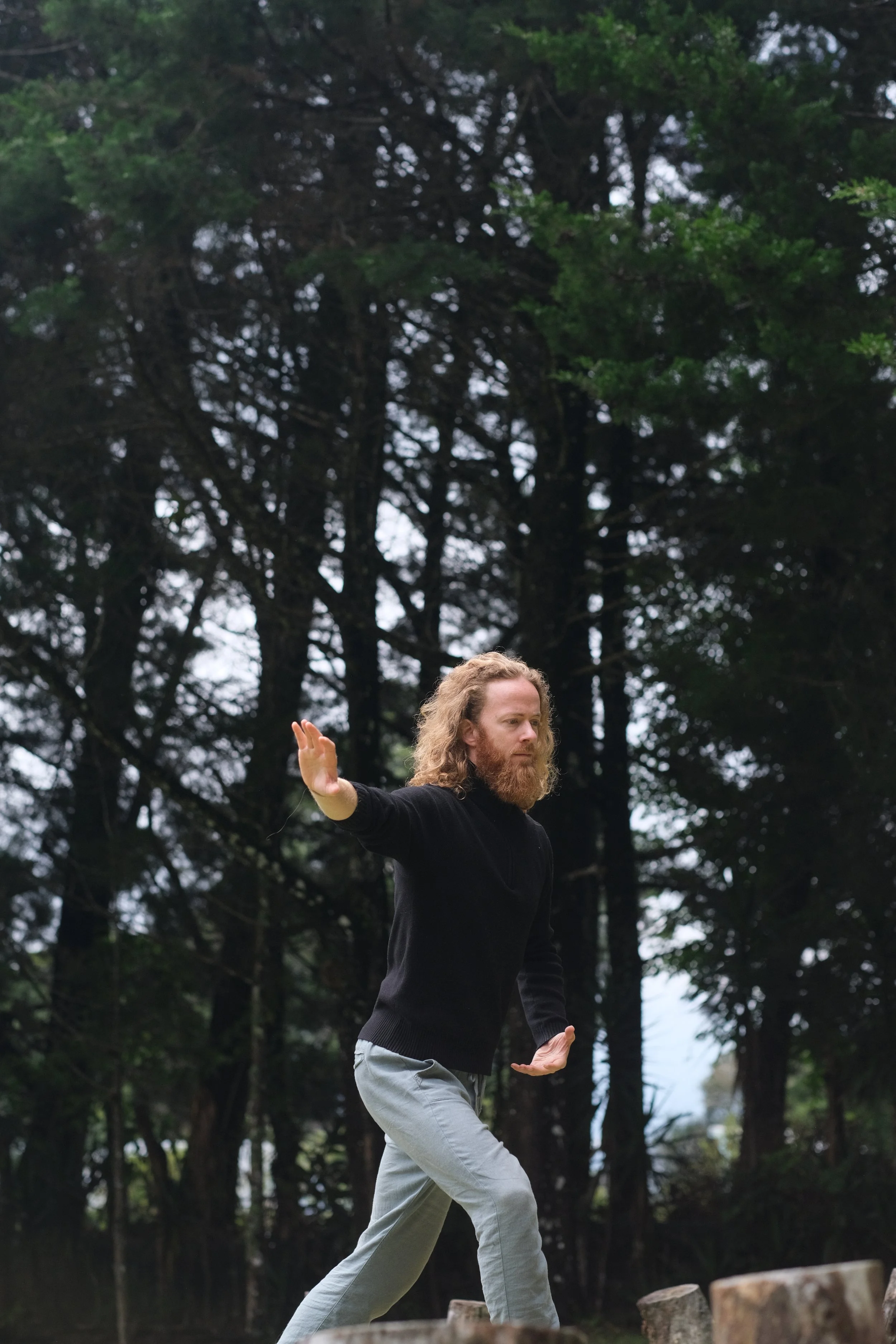
Photo credits
Research Support
Martin Givors – Researcher in Anthropology of Somatic Practices, University of Grenoble
Gaëtan Rivière – Doctor in History and Aesthetics of Circus
Yvonne De Bruijn - Researcher in Voice, founder of Pansori Living Sound
Stéphane Jouan - Researcher, Director of Théâtre de l’Avant Scène, Cognac
Partners
Théâtre de L'Avant Scène, Scène Conventionné, Cognac
Le Sirque, Pôle National Cirque de Nexon, Nouvelle-Aquitaine
Cirque Théâtre d'Elbeuf, Pôle National Cirque de Normandie
La Brèche, Cherbourg Pôle National Cirque de Normandie
Le Centre National des Arts du Cirque (CNAC) de Châlons-en-Champagne
Scène Nationale du Sud-Aquitain
École Nationale de Cirque de Châtellerault
Oreka Zirkoa École de Cirque de Bayonne, Acrofolie École de Cirque de Lescar
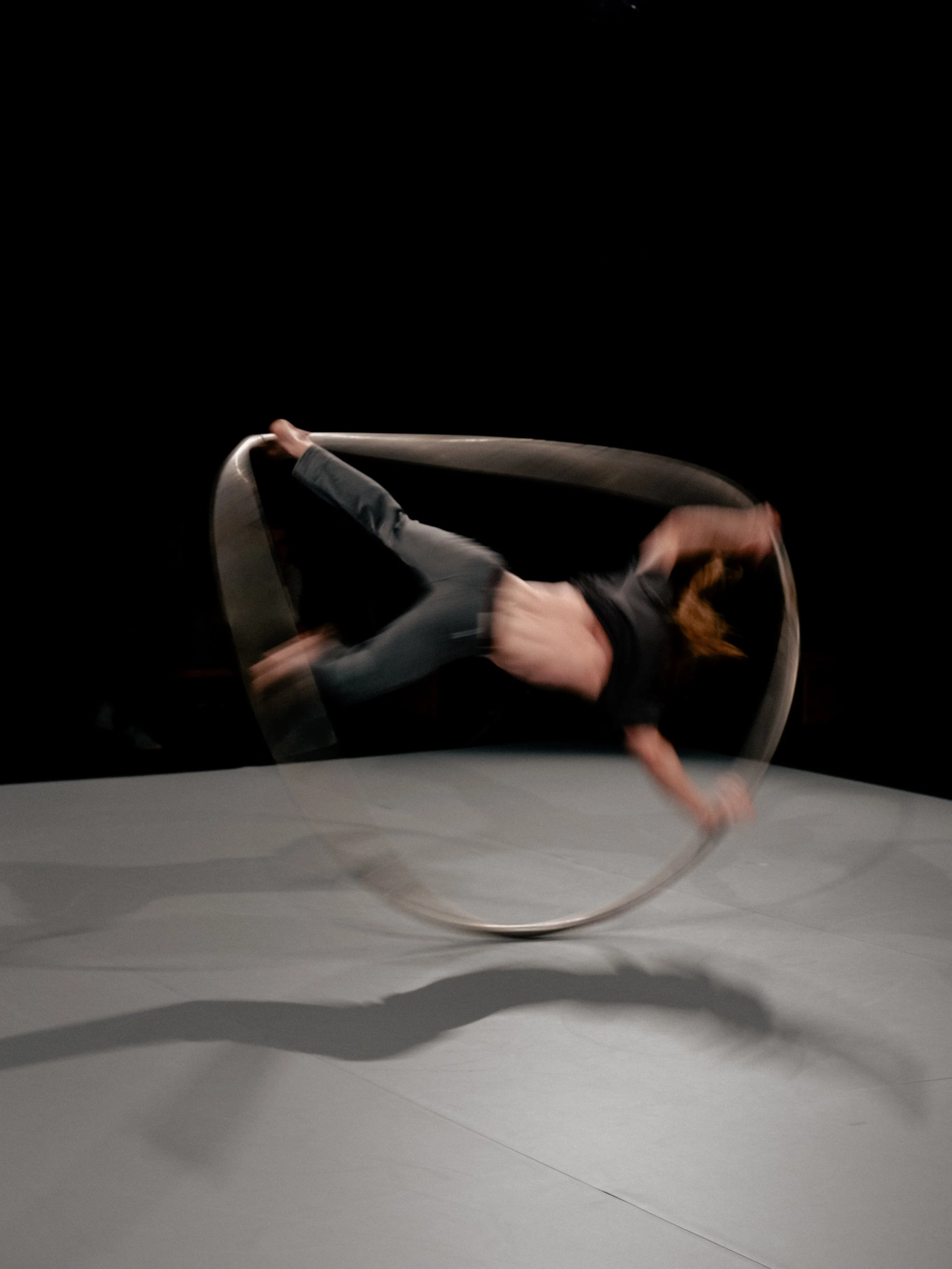
Photo Credits Jean Penninck